Tuesday, March 1, 2022

A Review of Humility as described in The Four Loves by C. S. Lewis


As of late, I have greatly enjoyed reading The Four Loves by C. S. Lewis. I believe that there is much to spiritually learn from this work. As I continued reading the section on Affection in this book, I greatly admired the following passage: 

''In Jane Austen's novel, Emma intends that Harriet Smith should have a happy life; but only the sort of happy life which Emma herself has planned for her. My own profession-that of a university teacher-is in this way dangerous. If we are any good we must always be working towards the moment at which our pupils are fit to become our critics snd rivals. We should be delighted when it arrives, as the fencing master is delighted when his pupil can pink and disarm him. And many are (Lewis, p. 51, 1960).''

I felt gladdened by this passage as I see such humility from Lewis here. He doesn't desire to be the greatest- in fact, he wishes for his students to surpass him. Nor does he believe that he holds the pedestal that all else must live up to. This is amazing. Lewis demonstrates Christ to his readers by his lack of concern over being the best among men. 

As I read this passage, I prayed to God for such humility. I truly believe that we humans are most happy when we are most humble. Take away our pride and we are not defensive over ourselves. From our pride flows our defensive nature to protect ourselves from others seeing us less than how we wish to be seen, and by being defensive, our efforts become all about defending ourselves rather than loving others. Indeed, no man on earth can think of others if his pride consumes his thoughts. Pride actually bounds us from freedom. Only through Christ can our efforts be reversed from our sinful tendencies which somehow tell us that we are the standard of what everyone else should be. 

Friday, February 25, 2022

Were Medieval Peasants Ignorant of the Scriptures? Part Three


For the previous two blog posts on this topic, see the links: 

https://themedievalist.blogspot.com/2022/02/how-aware-of-scriptures-were-peastants.html

https://themedievalist.blogspot.com/2022/02/were-medieval-peasnts-ignorant-of.html

Before I finish up my series of posts concerning the relationship between Medieval Peasants and the Bible, let me start by saying that I encourage all to read the first two posts on this topic before reading this one. Now that I have said that, let me proceed as I argue against those who allege that the peasants of the Middle Ages were ignorant of the Scriptures. 

During the early Middle Ages (generally dated 5th-11th century), several church synods across Europe called for the clergy to teach the peasants The Apostles' Creed and the Pater Noster. Likewise, many priests taught young boys the Psalms. Additionally, many parish schools were started throughout Europe which taught the Catholic faith to young men. Christianity was preached not just in the local churches, but also in the local towns, and on the streets. In 749, the Council of Cloevshoe, for instance, mandated priests to teach the faithful in their houses about the faith. On the southern end of Europe, in the diocese of Soissons, both boys and girls were taught their Catholic faith by the ninth century. Contrary to the claims of many, both rich and poor were trained in theology by the clerics of Europe. Across the continent, girls were often tutored by nuns. Martin Luther admitted that it was hard for a child to go ignorant under the leadership of the papacy (The Catechism of the Council of Trent p. XIX) and the Protestant reformer, Mathesius wrote about being trained by his schoolmasters to recite the Ten Commandments, the Creed, and the Our Father when was a child. 

Were the peasants ignorant of language? In 1179, the Catholic Church mandated potential education even for the poor. It called for teachers in the cathedrals to instruct young boys who were too poor to pay the typical price. The fact that there were land grants to peasants also shows that the former had some literary knowledge. 

Before the 1980s, most scholars believed that peasants were illiterate. However, this has been challenged by some recently. Some now believe that there were peasants who had a basic knowledge of reading the alphabet but not of writing the language. There have been archeological evidence, for instance, that some Russian peasants knew how to read and write as evidenced in the Burbank papers of these peasants going to court. One of the strongest evidences that some of Englan's peasants had some literary knowledge is that the court's documents to them were often in Middle English (and the nobility spoke Old French). Indeed, it was not until the fourteenth century that English became commonly spoken in the English courts. The fact that works like Layamen's Brute and Chaucer's The Canterbury Tales were written in Middle English, shows that these works of literature were appealing to more than the nobility and clergy of England. Even as the commoners spoke the English language (as many of them had practiced long before the Norman Conquest), these peasants were not ignorant of literature. Medieval historian Marco Mostert has elaborated more on this subject elsewhere. So has Medieval historian Charles F. Briggs. In his essay, ''Literacy, Reading and Writing in the Medieval West,'' Briggs shows evidence of written letters of the fourteenth-century peasants' revolt. Yes, even these commoners knew how to read and write. Additionally, there have also been studies that some commoners took up careers as scribes. 

For the sake of argument, however, even if all peasants had been illiterate, this does not mean that they were entirely ignorant of Biblical teachings and the message of salvation. I will now show evidence that the peasants, had they all been illiterate, knew Biblical stories from other means. 

Interestingly enough, not all theological teaching came from the church clergy in the Middle Ages. In fact, many children learned about Christianity from their parents teaching them it at home. Children were prepared for their first communion by their parents (though many children received the Eucharist as infants) and taught Catholicism since feeding on their mother's breasts. 

Despite the fact that Latin was the official language of the church, in England, the Anglo-Saxons heard sermons preached in the vernacular during church. This often included the reading of scripture to peasants who were otherwise, illiterate to read it. The people were often catechized about the Our Father and the Creed. 

Of course, much more could be said about the relationship between Peasantry and Scripture in the Middle Ages. Here, however, I just wanted to bring enough information forward to let the reader know that the Catholic Church instructed the faithful more than many fundamentalists give it credit. While this is not to say that the peasants were aware of everything in scripture, as explained in one of my previous posts, access to scripture was even hard for many of the church clergies. Certainly, many within the church clergy took advantage of the lower classes and used scripture abusively. Nevertheless, we should be careful not to paint the entire Catholic Church of the Middle Ages by the corruption  of some of its clergy. 

Today, many traditionalist Catholics look back on the Middle Ages as a golden age when there was one true church that rightfully suppressed all heretics. To these traditionalists, virtually everyone in the Middle Ages did not question the Catholic Church's teaching on the papacy, justification, and the Mass. However, many evangelicals have an entirely different view. To them, the Middle Ages was ''the Dark Ages.'' To the latter group, the Middle Ages was a time when an abusive Catholic Church ruled over the peasant and forbid the common man from any real knowledge of Scripture. In reality, however, historians understand neither group to be correct. There are elements of truth in both theories---but neither one is the entire story. 

Today, literacy became much more popular because of the Protestant Reformation. However, the literacy of Europeans should also be in part, attributed to the Catholic Church, especially those Catholics who took the time to help the commoners have a legitimate education. 

The Middle Ages was a more complicated era than many understand it to be. On the one hand, torture, plagues, and relentless wars describe Mediæval times. On the other hand, though, this was the time of courtly love, the beginning of western universities, the introduction to illuminated manuscripts, and the ongoing theological debates over various topics. Indeed, more commentaries were written about the Bible in the Middle Ages than in any other era of history. The Middle Ages certainly did not bear witness to a perfect church. The corruption of the papacy, for instance, arguably began in the early Mediæval period. That said, there is plenty of good and bad to learn from the Christian Church during its existence between the fifth and the sixteenth centuries. As a Mediævalist, I wish to study all aspects of the Middle Ages. Likewise, I want to be faithful to the study of history, no matter whose facts she best benefits. 

References: 

The Catechism of the Council of Trent. (1976). TAN Books. 

Further Sources: 

The Fathers of the Church: Mediaeval Continuation by Peter the Venerable. Translated by Irvven M. Resneck. (2016). The Catholic University of America Press. 


Wednesday, February 9, 2022

Were Medieval Peasants Ignorant of the Scriptures? Part Two


''Though literacy was of course far rarer than now, reading was in one way a more important ingredient to the whole culture (Lewis, 1964, p. 5).''  

These words are from the Discarded Image: An Introduction to Medieval and Renaissance Literature by C. S. Lewis. Lewis understood that even though many people in the Middle Ages were illiterate,  they were still learned concerning their knowledge of past stories. He later goes on to talk about the medievals and their love of books (p. 11). Lewis does this, just shortly after having spoken of their time's wide illiteracy. Interestingly enough, many nobility and peasantry alike were illiterate yet illiteracy did not mean that they were unaware of many of the same stories that had intrigued their ancestors during ancient times. Indeed, even the peasants of the Medieval world were more aware of the basic beliefs of Christianity than some have given them credit. 

In The Allegory of Love (Lewis, 2013, p. 197), Lewis mentions in a footnote a letter from John Ball to the peasants in Essex about the allegorical work: Piers Plowman. This note from Lewis is significant as Piers Plowman, much like the later works Everyman and The Pilgrim's Progress is full of Christian allegory. Likewise, this Middle English work frequently quotes from the Bible. Furthermore, even when Piers Plowman is not quoting from the scriptures, it draws heavily from Biblical themes. Indeed, I find it interesting that C. S. Lewis was aware of how the peasants in Essex must have known some of the scriptures as Piers Plowman frequently pays homage to the Biblical texts. Furthermore, even if all the peasants were illiterate who received this letter, no doubt, someone would have read it to them. As proof of this, for example, would be to look at the many cases throughout the Middle Ages when church clergy schooled their parishioners in the Apostle's Creed and the Lord's Prayer. 

I do think that it is worth mentioning that most Christians today do not know Koine Greek. Technically, modern men is no more literate in the Biblical languages than were the few church priests and monks in Medieval Times who knew Greek. I bring attention to this to highlight that just as the peasants depended upon many of the clergies for knowledge of the Latin texts, we likewise, depend on Biblical scholars of today for knowledge of the Greek texts. Don't misunderstand me. I'm not claiming that we have no better benefits concerning the Bible than we did then. Certainly, we have Bible translations whereas those in Medieval Times had much less access to the scriptures. Nevertheless, even today, we depend on what scholars who know the Biblical languages tell us what the earliest texts of the Old and New Testaments teach. If all Christians can learn Greek then we can study the oldest texts of the New Testament without relying upon someone else. Until that happens though, people will still depend on theologians for what the original biblical texts say.  

Agree or disagree with Medieval Catholicism, the church hierarchy hardly left the peasants with no knowledge of the Christian faith. Give or take a few doctrines, Protestants can appreciate the fact that no matter how corrupt some of the leadership of the Roman Church may have been, it faithfully kept the peasants informed at least on the basics of the Christian faith. For example, the English thirteenth-century archbishop of Canterbury, John Peckham, ensured that the peasants be instructed by their priests of the Creed, the Ten Commandments, the Pater Noster, the Ave Maria, the Seven Deadly Sins, etc. Unfortunately, a later Archbishop of Canterbury from the fifteenth century, Thomas Arundel, made sure that the peasants knew no more than the previously mentioned doctrines (Echard and Rouse, 2017, p. 1539). The point here, though, is not to defend all the priests of the Medival Church. Rather, I wish to show that at various points throughout the Middle Ages, it must not be assumed that the peasants were entirely ignorant of the scriptures.

Next, I would like to illuminate the reader to several instances throughout the Middle Ages where we see evidence of the church informing the peasants of the Bible's teachings. 

References: 

Echard, S. Rouse, R. The Encylopedia of Medieval Literature in Britain. (2017). Wiley Blackwell. 

Griffith, Benjamin W. English Literature. (1991). Barrons Educational Services


Langland, William. Piers Plowman. (1992). Oxford University Press. 

Lewis, C. S. The Allegory of Love. Cambridge University Press. 2013.

Lewis, C. S. The Discarded Image: An Introduction to Medieval and Renaissance Literature. Cambridge University Press. 

Tuesday, February 8, 2022

Were Medieval Peasants Ignorant of the Scriptures? Part One


One does not have to venture far into the writings of some fundamentalist leaders to see their historical, literary, and theological ignorance of Medieval Christianity. These fundamentalists often uphold a view of the Middle Ages contrary to that of historians, scholars, and theologians in essentially all other denominations. As a moderate Protestant, I find myself much more in unity with the views exposed by the leaders of the Reformation than of these groups. For example, the mainstream sixteenth-century reformers never claimed that the gospel was somehow lost during Medieval times. Likewise, the reformers never claimed that the Catholic Church ceased to be a true church. For these reasons, I do not consider many people today who claim to be ''Protestant,'' to be truly following the teachings of Wycliffe, Luther, Tyndale, Cranmer, Calvin, and the many other sixteenth-century reformers.  

Of all the false criticisms made of Medieval Christianity, a popular one among fundamentalist Christians is that the peasants were ignorant of the scriptures until the reformers suddenly came around in the sixteenth century. This view ultimately portrays the reformers as not reformers only-- but also as saviors of Christianity. It makes the Protestant Reformation out to be some restorationist movement that somehow saved the Roman Church from an alleged false gospel. This narrative from fundamentalists portrays Medieval Christianity to have been a false Christianity from at least the eleventh century (though many go much earlier). Ultimately, this claim fits the agenda of such religious groups as they conveniently use it to ignore both the church fathers and the medieval saints who lived and died within the fifteen hundred years before Luther's Ninety-Five Thesis

A significant historical fact to mention here is that papyrus largely disappeared from Europe after the gradual decline of the Western Roman Empire. This fact is nothing short of significant. The reason for this is that access to paper became much rare to many throughout the Medieval world. On the contrary, Parchment, which was much more expensive and rare, was used essentially only by the clergy and wealthy. It was not until the fifteenth century (shortly before the Protestant Reformation) that paper, having come from Spain, became largely accessible to all of Christendom. Of course, I am not bringing attention to these facts to defend those clergy who I do believe wanted the scriptures withheld from the common man. What I am doing, however, is to illustrate that access to the scriptures among the laity was a much more complicated issue than many fundamentalists like to portray it. 

 Indeed, many of the peasants who followed the reformers were also literary ignorant. Certainly, most of Europe did not become literate until the nineteenth century. If one is to be consistent in criticizing the Catholic Church for keeping the peasants illiterate, then one would also have to say the same about the Protestant Reformers. I'm not saying this to discredit the reformers. In fact, literacy spread faster across the Protestant countries than the Catholic ones. All I am saying is that many who followed either Rome or the reformers were literary ignorant. While we should be grateful for the appeal of the reformers for all people to be able to read, we ought not to exaggerate the literacy abilities of their contemporaries as well as those who proceeded them. 

Anyone who knows me probably knows by now that I call out both Catholics and Protestants when they claim theological positions for their agenda that conflicts with history. For example, I have praised the works of Catholic historian, Brian Tierney, as he has challenged the claims of many Catholic apologists concerning their false claims that papal infallibility originated in the first-century church. Likewise, I have praised Protestant church historians who have challenged the historicity of Evangelical apologists when the latter make claims contrary to historical facts. As a historian, I am far more interested in the facts than in the religious agenda of certain groups. I've seen people throughout my life in various different denominations make contrary claims to historical documents to fit their precious theology. However, many forget that theology is objective, while history is factual. 

*While the clergy were arguably the dominant force behind Medieval theology, the nobility often had more to do with this than either Roman Catholic apologists or fundamentalists typically admit. For example, many bishops throughout Europe were appointed by their respected monarchs instead of the pope before the eleventh century. Likewise, the promotion of the nobility's literacy did more or less often depend on the king's willingness for his people to be educated. 


References: 

Pernoud, Regine. Those Terrible Middle Ages. Ignatius Press. 2000.

Tuesday, December 28, 2021

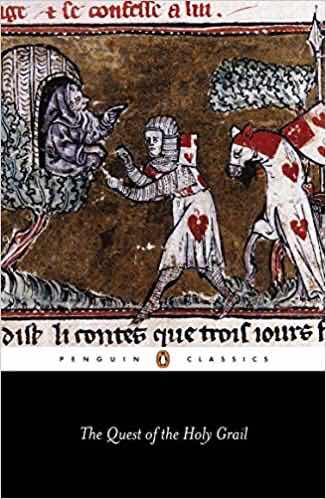
A Review of Quest of the Holy Grail Part V


In Chapter Six of Quest of the Holy Grail, Sir Perceval, otherwise known as Perceval of Wales, arrived at a chapel. There, he found shelter and good food. As the sixth chapter is quite long, I will only cover some highlights in this review. 


When he found the chance, Perceval asks the lady there when his friend, Lancelot, who he is looking for, is. Interestingly enough, the title of the work, Quest of the Holy Grail, is mentioned in his conservation with her. 
The lady revealed to Perceval that she is his aunt. The knight, in turn, asks if she knows how his mother is doing, and she responds, to his dismay, that his mother died as soon as he had left the king’s court. In response, he asked her how she knew this, and she says (without directly answering) that his mother had died that very day. Likewise, she claims, his mother had been broken-hearted over his departure. Responding, Percival asked again about his friend knight, and whether or not she has seen him, though her response was more concerned with a legend of Joseph of Arimathea, and his discovery of the holy grail many years ago. 


The lady told Perceval that the round table is a successor to another table that Joseph of Arimathea sat at. In return, knights have come to the round table from all ends of the earth, for much power resides with the table. She speaks of the love that all the knights have for it including Perceval’s own adoration. Finally, she reveals that Merlin has anticipated the day that the knights would search for the grail since the table’s founding. 


  Perceval was told of how that God awaited the coming of Galahad who was described as the ''good and perfect knight (The Quest of the Holy Grail, 1969, Penguin Books). '' Afterwards, Percival was asked his own identity and he replied that he was a knight of King Arthur. 
Later in the text of the Vulgate-Grail, Perceval was attacked by an enemy of the Christian faith. However, as the knight lifted his cross, his enemy went asunder out of fear. After this, Perceval also came into battle against a wild serpent. Interestingly enough, the knight also came into contact with a lion*. The lion was pleased by his slaying of the serpent. 
Upon following the battle with the serpent, Percival is described by the text as the most pious of all Arthur's knights. The text, furthermore, connects Wales to the Arthurian tradition. 
As Perceval continued his journey, he asked God to protect him not only from the devil but also from his own sinful thoughts. 
Along the way, Perceval encountered two women. One rode on a lion while the other rode on a serpent. As he talked to them, the text describes the woman that sat upon the lion as being and faith, hope, belief, and baptism. Indeed, she is even described as the rock that Christ built his church. As a side note, I find this interesting as this medieval text does not identify either Peter alone or the papacy in general as the rock of Matthew 16. 
Along his way, Perceval encounters a temptress who attempts to divert him from the quest of the grail. In turn, he took off his clothes and nearly gave up the quest for the cup of Christ. Tragically, the knight stabs himself as he mourns over the sin that almost destroyed him altogether. 

                                                                      My Commentary: 


My Own Thoughts are quite positive about this story. It lacks the humor of The Canterbury Tales, but I don't think that that is a reason to not read it. As I have said before, The Quest of the Holy Grail is significantly more spiritual (albeit, more allegorical) than is The Canterbury Tales. Both are fine works of Medieval literature. Along with The Canterbury TalesSir Gawain and the Green Knight, and Everyman, I consider The Quest of the Holy Grail to be one of the masterpieces of Medieval literature.  


*A lion was often a symbol of Christ in Medieval art. No doubt, this must-have served as an inspiration to Aslan's depiction of a Christ-figure in The Chronicles of Narnia series by C. S. Lewis. 


Friday, October 29, 2021

The Purity of the Planets


In Medieval times, it was hardly unusual for literature to reference the gloriousness of nature, especially that of the planets. C. S. Lewis talks about in his work, The Discarded Image, how the medievals loved the earth more than do many today. Likewise, as Lewis frequently observed, eternity was a central focus in many medieval poems. 

I think it is good for the human mind to realize that the universe is greater than his/her desires. One of the reasons why we should read literature is so that we may understand the emotions and thoughts of other people better. Thinking only of ourselves will constrain us from a purer love of eternal life. For us to be true followers of Christ we must live to strive to be holy and endure an angelic innocence that is rare in this world. To achieve this goal, we must always remember that there is a brighter side of the universe than this realm outside of God's eternal kingdom. However, to be like Christ means we have to be different from the majority in this world. God calls us to be pure as are both the saints and angels in the celestial city. Of course, we have the inclination to disobey God because of Adam's sin which has stained our will. Our will, unfortunately, does not always desire its freedom, which is to rest in God Himself. 


It is interesting for us to think about how the angels have a greater free will than those of the human race. Indeed, the angels of heaven have a will that has not been stained by original sin. Imagine how we would resemble the purity of the angels had none of us ever sinned? The lack of innocence in our culture today has further separated us from the angelic qualities once beautified and admired in medieval literature. Today, our society is more engrossed with violence and profanity than with the wonders of the great planets and burning stars that should serve as a reminder to us that our world is neither the end nor the center of eternity. 


Monday, August 30, 2021

The Best Editions of The Canterbury Tales

 For those of you interested in reading The Canterbury Tales by Geoffrey Chaucer, I greatly recommend the following versions of this classic work of Medieval literature: 


The No Fear: Canterbury Tales does a great job at breaking down the Middle English text and explaining it in modern English to those otherwise unfamiliar with Middle English. This is good for any beginner not yet grounded in an understanding of either Middle English or Chaucer's works. 


  This edition from Barnes and Noble includes almost all of The Canterbury Tales. It has a modern English translation for each line of the Middle English text. What also makes this version great, however, are the many scholarly notes within this copy on The Canterbury Tales


This edition of The Canterbury Tales by Books-A-Million is one of the few that I am aware of that includes all of the stories. This edition is a good choice for those familiar with Middle English. 


The Riverside Chaucer includes not only The Canterbury Tales but all the works of Geoffrey Chaucer. This is the best work of Chaucer for any student or teacher of English literature that I have ever seen.